

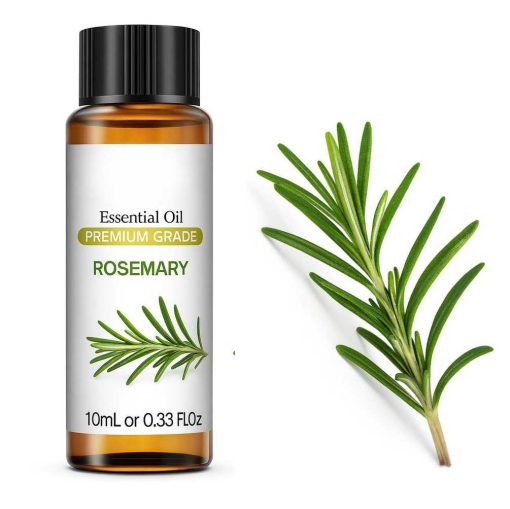
Essential Oil – Rosemary
Original price was: 9,00 €.6,00 €Current price is: 6,00 €.
- Net Contents: 10ml.
- Promote calm and clarity
- Pure natural – No additive, No Fillers
Only 2 left in stock
Essential Oil – Rosemary for Jewelry with fragrance
Common uses & potential benefits (with research where available)
-
Hair/scalp: In a 6-month randomized trial for androgenetic alopecia, rosemary oil performed similarly to 2% minoxidil in increasing hair count; itching was more frequent with minoxidil. (Use as a supportive option; see safety below.)
-
Alertness & memory: Exposure to rosemary aroma correlated with higher blood levels of 1,8-cineole and better cognitive performance in healthy adults.
-
Breathing support: 1,8-cineole (a major rosemary constituent in some chemotypes) has clinical evidence for reducing cough in acute bronchitis; rosemary itself shows a milder secretory (airway-fluid) response in lab settings. (Inference: cineole-rich rosemary may help some people feel more “open,” but evidence is stronger for cineole itself than whole rosemary oil.)
-
Antimicrobial/antifungal (surface/skin products): Lab studies show rosemary constituents (1,8-cineole, α-pinene) can inhibit microbes like Candida albicans—useful when formulating cleaners or deodorizing blends; these are in-vitro findings, not clinical cures.
How to use it (simple, safe starting points)
-
Diffuser (room use): 3–5 drops per 100 mL water; run 15–30 minutes at a time.
-
Scalp serum (leave-on): 1–2% dilution = 6–12 drops per 30 mL (1 oz) of jojoba or fractionated coconut; massage into scalp 1–2×/day. (Give it 3–6 months for any hair-cycle changes.)
-
Shampoo boost: 0.5–1% total EO in your bottle (about 3–6 drops per 30 mL).
-
Muscle rub (ct. camphor): 2% total EO in a carrier; apply after activity.
-
Steam inhale / shower: A drop on the shower floor away from direct spray (avoid face/eyes).
Safety (read this part)
-
General dilution: Everyday leave-on products 1–2%; spot or rinse-off up to 3–5%. Professional dermal maximums vary by chemotype (e.g., ~16.5% for ct. camphor, ~6.5% for ct. verbenone per Tisserand & Young). Consumers should stay far below these.
-
Kids: Oils rich in 1,8-cineole (some rosemary) can irritate airways; don’t apply to or near the face of infants/young children, and diffuse only briefly in well-ventilated rooms.
-
High blood pressure & epilepsy: The common “avoid in hypertension” warning for rosemary oil isn’t supported by convincing evidence; still, if you have seizure disorders or chronic conditions, use cautiously and consult your clinician.
-
Pregnancy: Use low dilutions and consult a healthcare professional (standard EO caution).
-
Eyes/undiluted use: Avoid. Patch-test skin. Keep away from pets’ spaces; never apply to animals directly.
Always dilute before skin use (except rare emergencies for minor burns).
Avoid eyes, inner ears, mucous membranes.
Check for allergies before first use.
Not for ingestion unless guided by a certified professional.
Not suitable for small children and pregnant women
| Net Contents: | 10ml. |
|---|---|
| Brand | BUVART |
Only logged in customers who have purchased this product may leave a review.
Related products

Essential Oils

Essential Oils


Essential Oils

Essential Oils

Essential Oils

Essential Oils

Essential Oils

Essential Oils
Reviews
There are no reviews yet.